HZSGlobal
Pre-Shipment Inspection for Batching Plants: A Complete Buyer's Checklist
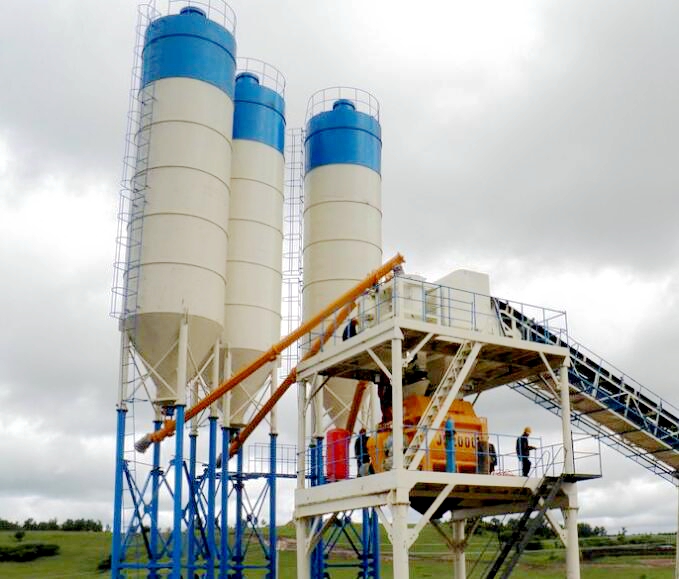
A pre-shipment inspection (PSI) is the only time you can catch defects before your money is locked in. You should hire a qualified third-party inspector or visit the factory yourself to verify that every component matches your contract specification, that welding and fabrication meet standards, and that control systems function correctly under power. Skipping this step accounts for roughly 30% of the disputes handled by international trade mediation bodies in the machinery sector.
Why Is a Pre-Shipment Inspection Essential for Batching Plants?
Concrete batching plants are complex, multi-component systems shipped in pieces. If a critical part is missing, undersized, or damaged when it arrives, you face months of delay sourcing replacements while your foundation sits empty and your project deadline slips. A PSI lets you verify at the factory that the mixer matches the model number on your order, that the electrical cabinet is properly wired, that the hopper volume matches your specification, and that the load cells have valid calibration certificates. You can reject substandard components before they ever get packed into a container.
Most Chinese manufacturers accept third-party inspections as standard practice. If a supplier refuses a PSI or pushes back on your inspector's requests, that is a major red flag.
What Documentation Should You Check First?
Before inspecting a single bolt, verify the paperwork. Documentation issues are the most common cause of customs delays and warranty disputes.
- Commercial invoice: Does the model number, capacity, and serial numbers match your purchase contract?
- Packing list: Do the quantities of each component match what was ordered? Are spare parts itemized separately?
- Bill of materials (BOM): Does the supplier's BOM list the brands and models of major components (motors, load cells, contactors, bearings) as agreed?
- Load cell calibration certificates: Are they dated within 12 months and traceable to a national standard?
- CE/ISO certificates: Are the certificates in the correct company name and unexpired?
- Welding certificates: For main structural members, request WPS (Welding Procedure Specification) documents if your contract requires them
- Operation and maintenance manuals: Are they in your required language? Do they include electrical schematics, hydraulic diagrams, and parts breakdowns?
- Form E (Certificate of Origin): Required for ACFTA countries — is it prepared and signed?
What Structural and Welding Checks Should You Perform?
The structural integrity of your plant determines its lifespan. Spend time on these physical checks:
Main frame and mixer support structure: Check all main weld seams visually — they should be uniform, free of cracks, and fully filled with no undercut or porosity. Use a weld gauge on critical load-bearing joints. Chinese factories typically follow AWS D1.1 standard, but verification is your responsibility.
Paint and surface treatment: Standard Chinese plants use two-coat epoxy paint (primer + topcoat) for a total thickness of 80–120 microns. If your contract specifies marine-grade painting (useful for humid coastal sites), check for a three-coat system: zinc-rich primer, epoxy mid-coat, and polyurethane topcoat reaching 150–200 microns. Measure with a dry film thickness gauge.
Bolt hole alignment: This is the most common field assembly complaint. Have the factory dry-fit at least the main column-to-beam connections to verify hole alignment. If they cannot or will not do a test fit, require photo or video evidence of jig-fit alignment during fabrication.
Silo and hopper wall thickness: Use an ultrasonic thickness gauge to spot-check silo walls and aggregate hopper plates. The specified thickness should match your contract (typically 4–6 mm for standard hoppers, 6–8 mm for silo shells). Cut corners on steel thickness are a known issue with budget manufacturers.
How Do You Inspect the Electrical System?
Electrical problems are the leading cause of startup delays. Inspect these items with care:
- Control cabinet: Open the cabinet and check that wiring follows a clean, organized layout with wire numbers on every terminal. Loose wires or messy bundles indicate rushed assembly
- Component brands: Verify that contactors, relays, circuit breakers, and PLC match the brands specified in your contract. If it says "Schneider," but you find Chint or Delixi, flag it
- Cable sizing: Confirm that main power cables are sized for the plant's total load with a 10–15% safety margin (typical for Chinese plants). Undersized cables cause overheating and premature failure
- Motor nameplates: Check that each motor (conveyor, mixer, screw conveyor, compressor, pump) has a legible nameplate showing the correct kW rating, voltage, and RPM
- VFD settings: If your plant has variable frequency drives (VFDs) for main drives, verify they are programmed for your local voltage and frequency (50 or 60 Hz)
- Emergency stops: Check that emergency stop buttons are installed at the control panel, mixer platform, and aggregate discharge point
- Power-on test: Request a full power-on test of the control system and all motors. Run each motor for at least 10 minutes under no load to check for vibration, overheating, or unusual noise
What Mechanical Components Need Close Examination?
Mechanical issues are expensive to fix after installation because they require large tools, cranes, or lifting equipment. Verify these at the factory:
Mixer inspection: Open the mixer inspection door. Check blade-to-liner clearance — it should be 2–4 mm for twin-shaft mixers. Look for uniform blade angle (typically 30–45 degrees). Inspect discharge gate seals for even compression. Run the mixer idle and listen for metal-on-metal contact.
Conveyor system: Check belt tracking adjustment and belt joint quality. Vulcanized joints on the conveyor belt are superior to mechanical clamps. Check roller spacing — standard is 1.2 m on carry side and 3 m on return side. Confirm the belt width matches your specification.
Weighing system: Verify load cell mounting. Each cell should sit on a flat, clean surface with no binding on the mounting assembly. Perform a simple calibration check if a test weight is available. For aggregate scales, spot-check the hopper is level and the suspension system is free to articulate.
Pneumatics: Check air compressor model and rating. Verify that the compressed air piping is routed with proper slope for condensate drainage. Test each pneumatic cylinder (discharge gate, silo butterfly valve) through a full open-close cycle.
Bolt torques: High-strength bolts on structural connections should be tightened to the specified torque value. Ask the factory for torque test records on a sample of connections.
What Packing and Marking Checks Should You Do?
Bad packing leads to damage in transit. Chinese factories have improved packing standards significantly, but you should still verify:
- Container fit check: Does the packed equipment fit the planned container size (20 ft or 40 ft)? Overhanging or wedged-in items risk damage during container handling
- Bracing and blocking: Heavy components should be bolted or chained to the container floor. Gaps should be filled with timber bracing, not loose dunnage
- Moisture protection: Electronic components and motors should be sealed in VCI (vapor corrosion inhibitor) bags with silica gel packs. For maritime shipments, the entire plant should be wrapped with shrink film and have VCI emitting elements placed inside
- Marking: Each package should be marked with the contract number, package number (1 of X), component name, and gross weight in kilograms. Unclear or missing markings cause chaos at the receiving port
- Spare parts box: Verify the spare parts box is packed separately in a clearly labeled, small crate that is easily accessible. Nothing is worse than opening five containers to find the mixer blade set
Should You Use a Third-Party Inspector or Go Yourself?
Both approaches work, but each has trade-offs. A qualified third-party inspection company (SGS, Bureau Veritas, TUV, Intertek) brings experienced machinery inspectors who have done hundreds of plant inspections. They know what to look for and issue a detailed report accepted by most trade finance banks. Typical cost: $800–$2,000 depending on plant size and factory location.
Visiting the factory yourself gives you direct interaction with the production team and lets you negotiate any issues face-to-face. However, unless you have mechanical engineering experience with batching plants, you may miss subtle defects that a specialist inspector would catch. The combination works best: visit yourself for relationship-building and broader impressions, plus hire a third-party inspector for the technical checklist.
What Happens If the Inspection Finds Defects?
Defects found during PSI fall into three categories:
- Minor: Paint touch-up, loose wires, missing labels — the factory can fix these within 1–2 days, and you can proceed with shipping
- Major: Wrong motors, undersized cables, missing components — the factory must replace or upgrade, typically adding 5–10 days to lead time
- Critical: Structural cracks, failed power test, mismatched mixer model — you should consider refusing the shipment or renegotiating terms significantly
Your contract should specify that payment of the final balance is conditional on a passed PSI. A standard clause: "Buyer's acceptance is subject to satisfactory pre-shipment inspection by buyer or its designated representative. Final payment is due upon issuance of an inspection report confirming conformance to specifications."
Planning a Plant Purchase?
We offer free factory inspection arrangements and can coordinate with your chosen third-party inspector.
Get a free quote for your concrete batching plant → Contact us today